What I Learned From 16,701 Jim Cramer Stock Picks
There is a popular online joke called "Inverse Cramer." The idea: if Jim Cramer says buy on TV, do the opposite, and you'll make money.
It's a fun meme. But is it actually true?
To find out, I analyzed every buy-side stock recommendation the finfluencers.trade pipeline extracted from Jim Cramer's CNBC show Mad Money between January 2018 and December 2024 — 16,701 calls in total — and tracked what happened to each stock afterwards.
The result is more interesting than the meme.
The full working paper is on SSRN. The data and scripts are public on GitHub.
The headline in one picture
Three findings stand out. They contradict each other on the surface, and that's the point.
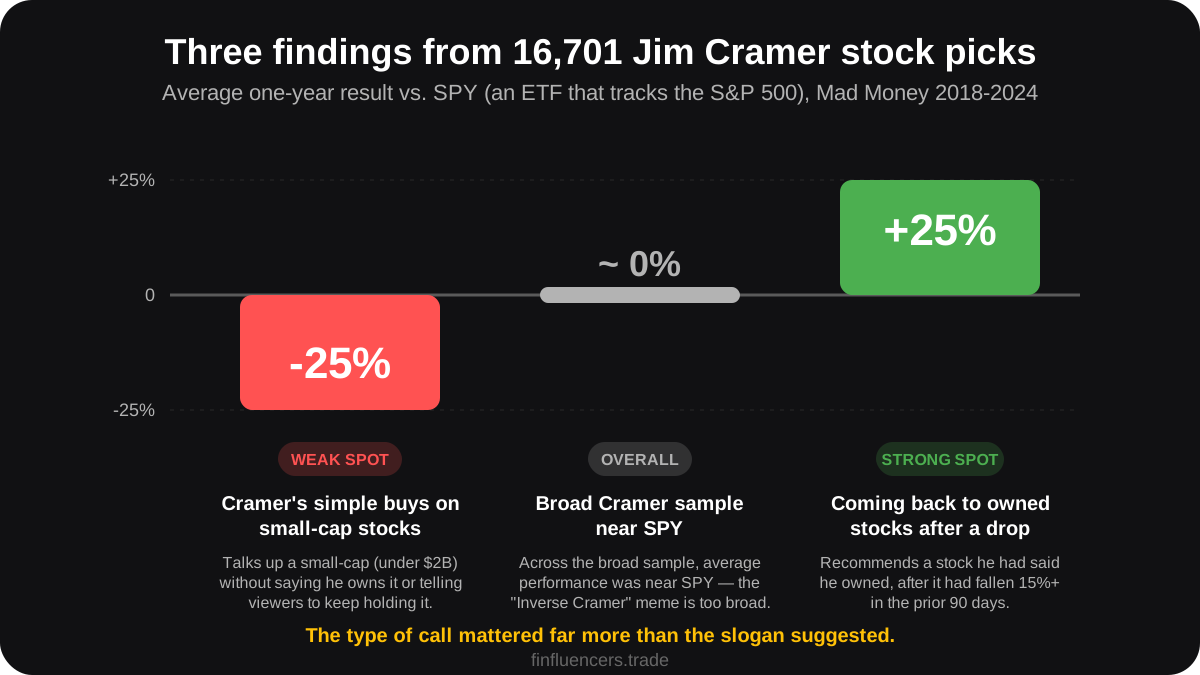
In short:
- Betting against the broad Cramer sample was roughly a wash. The blanket "Inverse Cramer" rule didn't really work in the data.
- One specific kind of call did very poorly. Simple buy recommendations on small-cap stocks — the ones where Cramer wasn't telling viewers to keep holding and wasn't saying he owned the stock himself — lost money on average while the market rose.
- Another kind did very well. When Cramer came back to a stock he had publicly said he owned, after that stock had recently fallen, the calls beat the market by a wide margin.
So the type of call mattered far more than the slogan suggested.
The setup
Jim Cramer hosts CNBC's Mad Money, where he makes hundreds of stock comments every week. Some are short "buy this!" calls. Some are answers to viewers asking "should I keep holding XYZ?" And some are about stocks in his Charitable Trust — a real-money portfolio he runs in public, similar to a published model portfolio.
The study covers seven years of those calls — 16,701 in total.
For each call, the study tracked the stock's price over the next year and compared it to SPY, an exchange-traded fund (ETF) that tracks the S&P 500. SPY is the simplest "I just bought the U.S. stock market" benchmark.
So whenever you see "vs. SPY" below, it just means: "compared to what would have happened if you had put the same money in the broad U.S. market instead."
A quick note on what the numbers mean. When you see something like "+25% vs. SPY," it means the stock did 25 points better than SPY over the same one-year window after the call. (If SPY returned +10% over that window, a "+25% vs. SPY" stock returned +35%.) It's just the gap between two returns measured from the same start date.
Not all Cramer calls are the same
Here's the key idea behind the study.
When Cramer talks about a stock, he isn't always making the same kind of statement. The study sorts the calls into three groups based on what he said on air:
- Simple buy call — Cramer says "buy" or makes a clearly positive call, but isn't saying he owns the stock and isn't telling viewers to keep holding it.
- Hold advice — A viewer says they own a stock; Cramer tells them to keep holding — without saying it's also in his own portfolio.
- Disclosed holding — Cramer says (now or in an earlier mention of the same stock) that the stock is one of his Charitable Trust holdings.
One important caveat about the disclosed holding group: the study didn't peek at the actual contents of Cramer's Charitable Trust. The label comes only from what Cramer says on the show.
But Cramer doesn't repeat "I own this" every time he mentions one of his stocks. He might say it once, then come back to the same stock weeks later without restating it. So the study doesn't decide the label from a single mention in isolation. It looks across the whole run of mentions Cramer makes on each stock — a continuous stretch of attention before he goes silent on the name. If he disclosed ownership anywhere in that run, his other mentions inside the same run also count as disclosed-holding calls. If he never disclosed ownership during that run, none of them do.
In other words: the label is inferred from his pattern of statements about a stock, not just from the words he used on one specific day.
That distinction sounds small. It isn't:
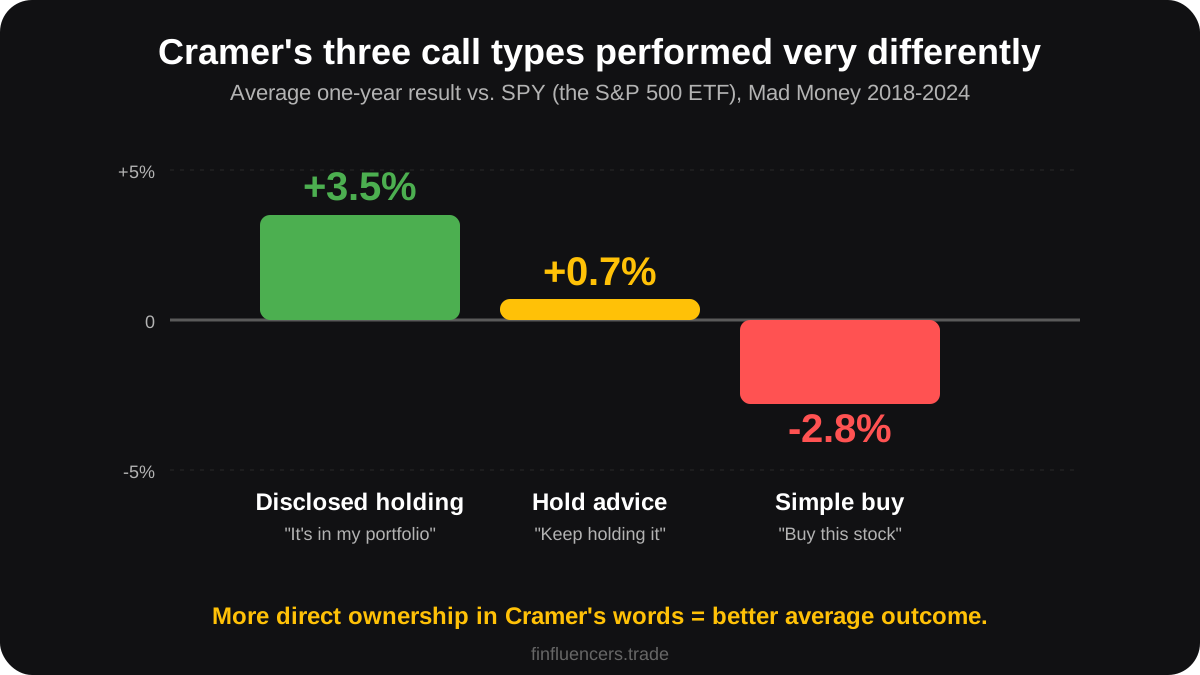
Looking at the average one-year result vs. SPY:
- Disclosed holdings beat the market by about 3.5% on average.
- Hold advice was roughly flat.
- Simple buy calls trailed the market by about 2.8% on average.
The pattern: the more direct ownership in Cramer's words, the better the calls did on average. The more casual the call, the worse.
Where Cramer was weakest: simple buys on small-cap stocks
The "simple buy" group as a whole isn't a disaster — it just trails the market a bit. But within it, one slice does very poorly: simple buys on small-cap stocks.
In market parlance, "small-cap" means a company whose total stock-market value is under $2 billion. That's still a real business — but it's small compared with names like Apple or Nvidia (worth thousands of times more). Small-cap stocks tend to be less liquid. Fewer shares trade hands each day. When a national TV show shines a spotlight on one of them, the price often jumps quickly, then drifts lower over the following months.
That's exactly what the data shows.
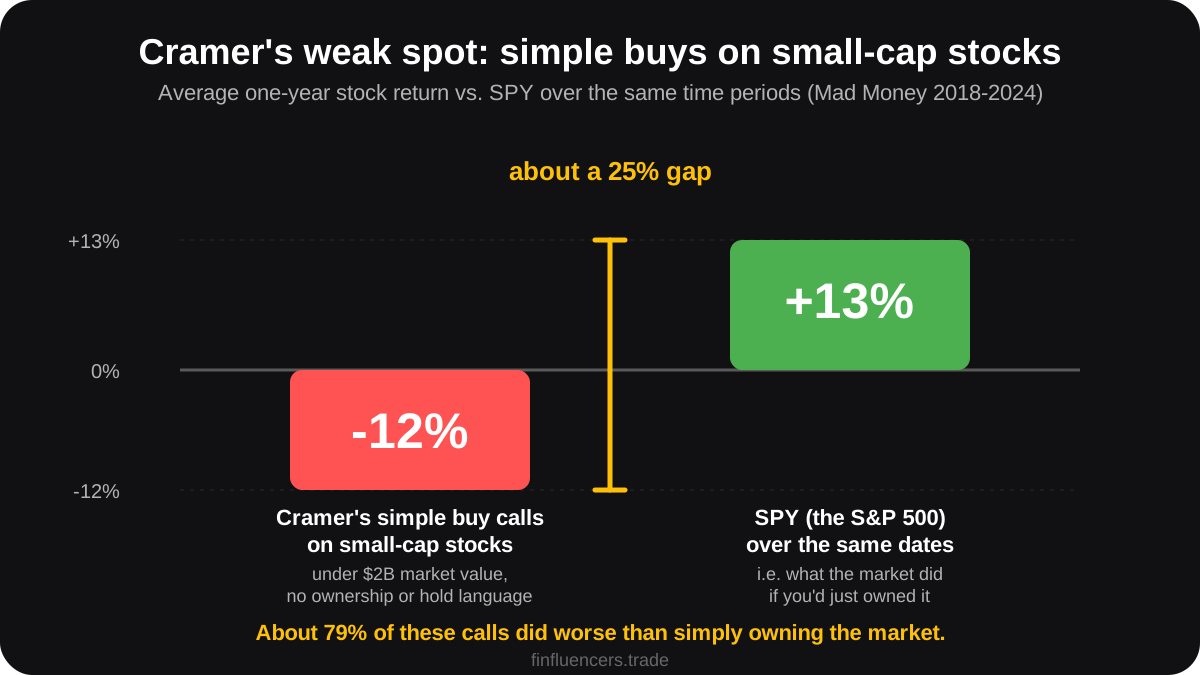
For these picks:
- the average stock was down about 12% one year later,
- SPY was up about 13% over the same time periods,
- so there's roughly a 25% gap versus simply owning the market, and
- about 79% of the calls did worse than SPY.
This is the meaningful weak spot. Not "Cramer is always wrong." Not "every Cramer pick fails." But when he talks up a small-cap stock on TV, without saying he owns it and without telling viewers to keep holding it, the average stock loses to the market by a lot.
Why "Inverse Cramer" is too simple
Now back to the meme. If you mechanically bet against the broad sample, would you have made money?
Mostly, no. The blanket "Inverse Cramer" rule was close to a wash in the data. Some calls did badly. Some did very well. They roughly cancelled.
The strong "anti-Cramer" pattern only shows up after stacking several filters together:
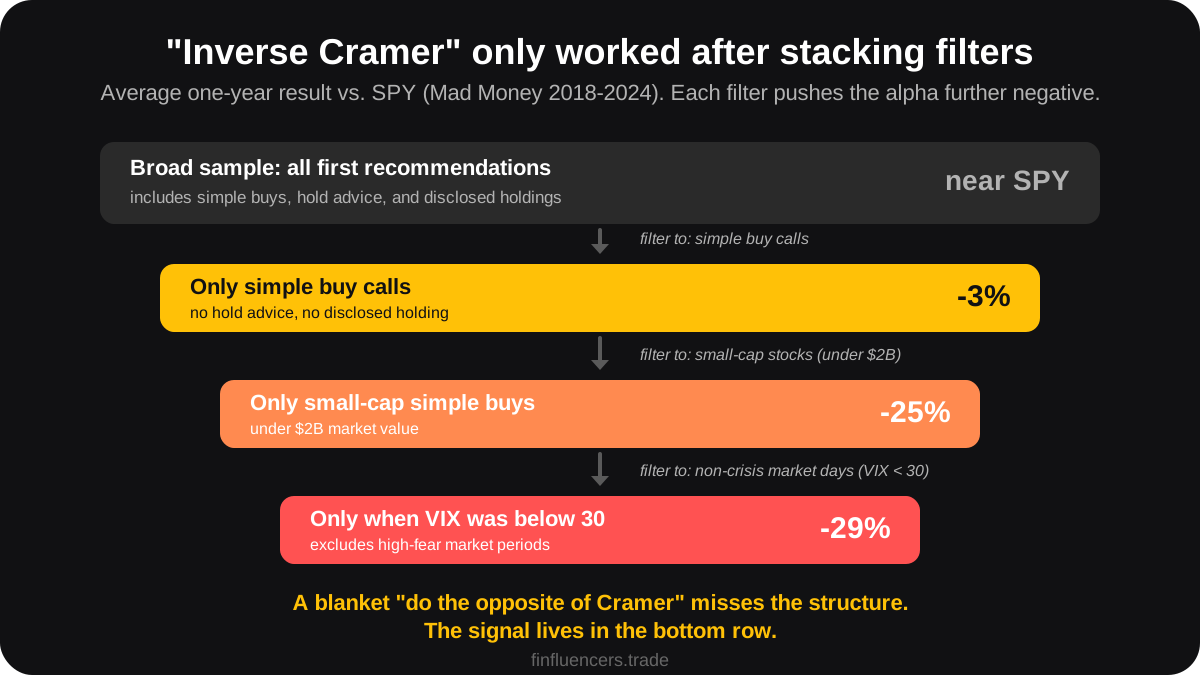
You have to narrow down to:
- Small-cap stocks (under $2 billion in stock-market value),
- Simple buy calls only (no "keep holding it," no "I own this"), and
- Calm markets — meaning the market wasn't in a panic. The standard way to measure this is the VIX, often called the "fear gauge." Low VIX means calm markets. The pattern only worked outside high-fear periods.
Once you narrow down that far, betting against those specific picks would have done well in the sample. But that's a much more specific rule than "do the opposite of Cramer."
This matters because slogans simplify the world. The meme version of "Inverse Cramer" sounds like a universal trading rule. The honest version is: the average TV-spotlight simple buy call on a small-cap stock tends to fade, especially when markets aren't already panicking.
Where Cramer was strongest: returning to owned stocks after they had fallen
Here's the surprising part — and Cramer's clearest positive result.
The strongest finding had nothing to do with simple buy calls. It was about a very specific situation:
- Cramer had previously told viewers a stock was in his Charitable Trust,
- the stock had then fallen at least 15% over the previous three months, and
- Cramer came back on the show to recommend it again.
In those cases, the stock beat SPY by about 25% over the next year, on average. For a viewer who acted on the recommendation when the stock was already down, that would have been a profitable "buy the dip."
Now compare that to a different set of recommendations: stocks Cramer recommended after they had fallen 15%+, but where he hadn't said he owned them. Same kind of "this stock just dropped, I like it" setup — just no public ownership. Those calls were roughly flat versus SPY.
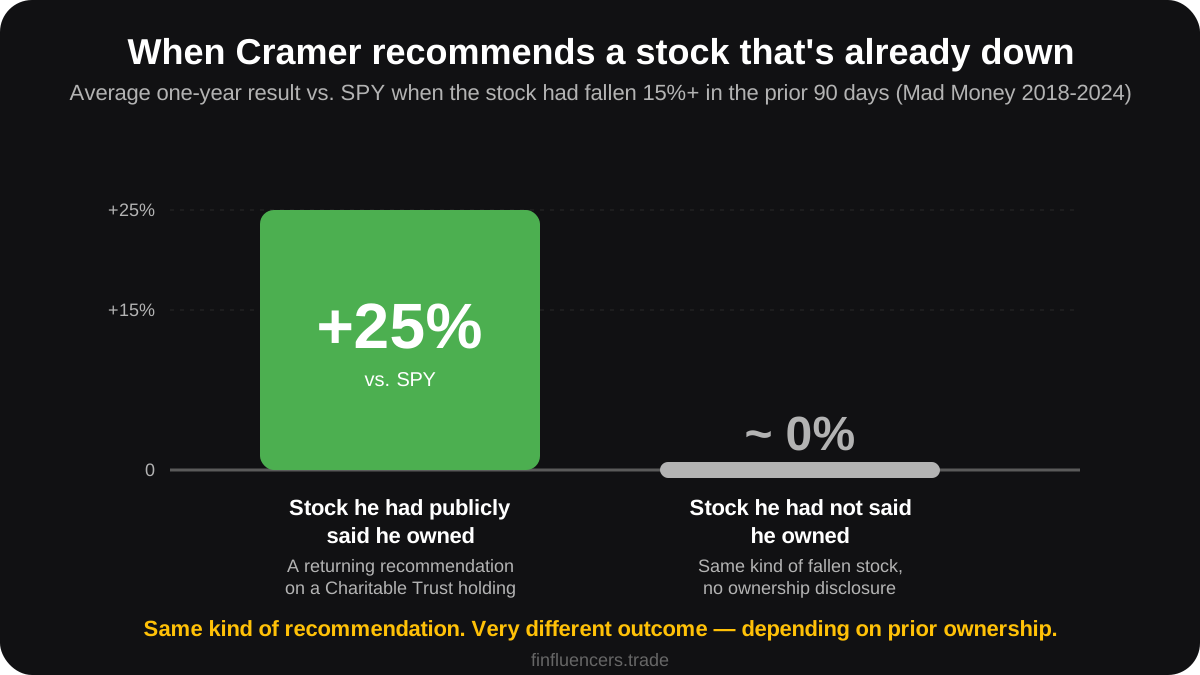
So the difference wasn't "buy stocks that are down." It was "buy stocks that are down — when Cramer has already publicly committed to owning them."
That's much more interesting than "Cramer is always wrong." It says his disclosed personal ownership carried real information in this sample, especially when he came back to a position after it had fallen.
What this means for investors
I want to be careful here. This isn't trading advice. I'm not telling anyone to buy or short anything.
But there is a takeaway that goes beyond Cramer himself:
Stock recommendations should have track records — and the type of recommendation matters as much as the recommendation itself.
Whenever someone tells you to buy a stock — on TV, YouTube, X/Twitter, a podcast, a Reddit thread — these are useful questions to ask:
- What kind of statement is this — a casual "I like it" or a serious commitment with their own money on the line?
- What's their track record on calls of that exact type?
- Is this a small-cap stock that might move just because they're talking about it?
- Are markets calm right now, or are people panicking?
In the Cramer data, those four questions were the difference between a 25% loss and a 25% gain versus the market.
That's the broader idea behind finfluencers.trade: financial media is powerful because it turns stock ideas into public attention. Attention by itself isn't a good investment thesis. We can and we should measure what actually happens after public stock calls in the same boring systematic way we'd measure any other forecaster.
What this study does not prove
A few honest caveats:
- It looks backward at one specific period (2018–2024). That window includes the COVID crash, the 2021 retail boom, and the 2022 bear market. Patterns can change.
- It is not a recommendation to buy or short any stock on Cramer's or anyone else's recommendations.
- It does not predict that the same patterns will hold next year, next decade, or in different market conditions.
The paper is descriptive: it documents what happened. It's useful for being more skeptical of slogans and for asking sharper questions about stock recommendations. It is not a trading rule.
Read the full study
If you want the academic version — full tables, methodology, statistical detail, robustness checks:
- SSRN working paper
- Public GitHub repository (data, scripts, paper source, figures)
Final takeaway
The data didn't say "Cramer is always wrong." It said the type of call mattered.
Cramer was strongest when he revisited stocks he had publicly said he owned — especially after they had dropped. He was weakest on simple buy calls about small-cap stocks he had no public stake in.
That's a lot more useful than the meme. It tells investors what to look at, what to question, and why broad claims about any public stock-picker — positive or negative — usually miss the real story.
Track current Mad Money calls and their performance on the live profile.
Finfluencers leaderboard
Browse live accountability across tracked voices on the platform — not only this study.